What Actually Works Better for Getting Good at Valorant Fast
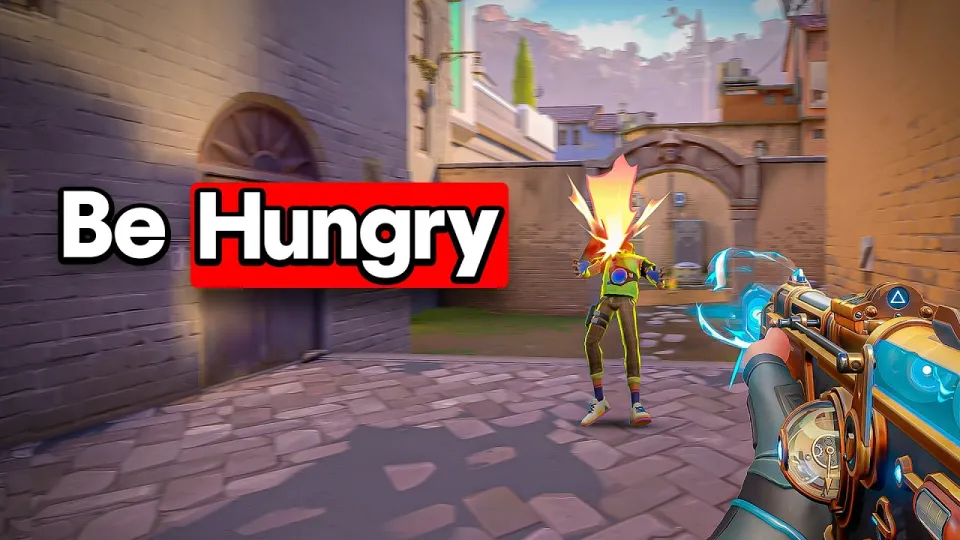
Video: How to Get So Good at Valorant it Feels Like Smurfing
Want articles like this for your own video to promote it on YouTube and Google? Order them through the Telegram bot @sat_sit_bot. It writes articles around your video, embeds the video and publishes them on popular niche websites (no ads). Try it free: 50 articles on us.
· based on the channel Konpeki
Key takeaways
- Smurfing in Valorant is not a cheat or a smurf account, it is the gap between reaction-based play and autopilot play.
- The core loop from Konpeki's breakdown: react to the enemy, stay unpredictable, keep the plan simple.
- Dry reps beat ranked grinding: side-to-side range drills, movement-error training at a 0.5 multiplier, and one clean shot per strafe.
- Ranked games are for testing decisions, not for learning mechanics you have never isolated in the Range or Deathmatch.
- Konpeki's Immortal Roadmap Program advertises 5 divisions in 10 weeks and 500 RR, with free calls and a Discord for office hours.
Getting so good at Valorant that your own rank feels like smurfing comes down to one shift: stop playing on autopilot and start playing on reaction. Smurfing behavior is not a cheat, a second account or a lucky streak, it is what happens when every peek, strafe and trade is a response to information instead of a rehearsed habit. The fastest route there is a small set of repeatable drills, a simple game plan you can actually execute under pressure, and honest review of your own deaths — the same framework Konpeki lays out in the video breakdown, with a free call and program details available through the Immortal Roadmap application.
Why Valorant smurfing is a decision gap, not a mechanical gift
A smurf does not win because their crosshair placement is physically impossible; they win because they are constantly making the opponent answer a question. When you watch a high-rated player in a lower lobby, the pattern is consistent: they take space before the enemy is ready, they re-peek from a different angle, and they never commit to the same timing twice in a row. That is a decision gap, and it is learnable.
The opposite player — the one stuck in the same rank for months — usually has decent aim but predictable habits. They hold the same angle every round, they swing wide on the same timing, and they walk into the same utility setup that killed them three rounds earlier. Aim trains the tool; decisions decide whether the tool ever gets used.
One practical consequence: your review should focus on the two seconds before each death, not on the flick you missed. Ask what information you had, what you assumed, and which option you ignored. That single habit changes more rounds than another hour of aim training.
The three-pillar loop: react, stay unpredictable, keep it simple
The most useful summary of this approach is short enough to remember mid-round: react to the enemy, stay unpredictable, and keep your plan simple. Each pillar fixes a different failure mode.
- React to the enemy. Do not pre-fire a timing you guessed. Gather the first piece of real information — a footstep, a utility sound, a teammate's callout — and let your first action come from that.
- Stay unpredictable. Change your angle, your timing and your utility usage between rounds. If the enemy can predict where you will be, your aim does not matter.
- Keep it simple. A three-step plan you execute cleanly beats a five-step plan you abandon halfway through the fight.
This is also why the advice feels repetitive across coaching content: the fundamentals do not change, only how precisely you apply them. The value is in the reps, not in new secret tech.
Dry reps that actually transfer to ranked
Mechanics improve fastest when you isolate them, and Valorant gives you the tools for that. The Range and Deathmatch exist so that ranked is not your practice ground.
A simple routine, run before you queue:
- Strafe shooting in the Range. Move side to side with A and D, fire one accurate shot per direction change, and reset your crosshair between shots. The key detail is that you fire on the moment your movement direction switches, not while you are still drifting.
- Movement-error training. Turn the movement error setting on and lower its multiplier, around 0.5, so the game punishes you for shooting while moving. This makes your counter-strafe timing honest instead of forgiving.
- Counter-strafe discipline. Practice stopping completely before the shot. If your first bullet lands while you are still sliding, the drill is not finished.
- Deathmatch with one rule. Pick a single behavior per match — for example, only take fights after a strafe — and ignore your score.
Ten to fifteen focused minutes of this beats an hour of unfocused aim grinding, because you are training a specific correction rather than vaguely "aiming better."
Build a one-page plan before you queue
Players lose more rounds to confusion than to aim, and confusion is a planning problem. A one-page plan for a map is enough: your default position on attack, your default hold on defense, one piece of utility you always use for entry, and one retreat path when the round goes wrong.
Keep the plan small enough to survive contact with the enemy. Three rules you can recite while walking to your position will outperform a notebook of setups you cannot remember under pressure. If you play with a duo or a full stack, agree on the first two actions of the round and let everything after that be reactive.
This is also where the sports analogy holds up. A football or soccer player does not invent a new system every match; they run a small number of patterns and adjust to what the opponent gives them. Valorant rewards the same discipline.
Common questions from players trying to climb
Several recurring doubts come up around this method, and they are worth answering directly.
- "Do I need a smurf account to practice?" No. A second account does not create skill; it only changes who you play against. Use Deathmatch and the Range for mechanics and keep one account for honest ranked reps.
- "Should I stop moving completely before shooting?" Yes, at the moment of the shot. The drill is about counter-strafing so your movement stops instantly, then firing. Continuous strafing while spraying is a separate, much less reliable skill.
- "Does this work on console?" The principles transfer. Controller players still benefit from reaction-based peeking, unpredictable positioning and a simple plan, though movement and counter-strafe drills need to be adapted to analog input.
- "How long before it shows in my rank?" Expect mechanical drills to show up in duels within a couple of weeks of consistent practice. Rank movement usually lags behind because it also depends on decision quality, consistency and how many games you actually play.
A related frustration is teammates who seem to play on autopilot. You cannot fix their decisions mid-round, but you can reduce the damage: give one clear piece of information, avoid stacking the same angle, and play your own plan instead of mirroring theirs.
Useful links
- Immortal Roadmap Program application: https://roadmap.gg/v/lUfrMRb74SE
- Free coaching resources and office hours on Discord: https://www.discord.gg/UnRETVmRpV
- Konpeki on Twitch: https://www.twitch.tv/konpekichan
- Konpeki on Twitter: https://twitter.com/coachpeki
- Konpeki on TikTok: https://www.tiktok.com/@coachpeki
The realistic path to feeling like a smurf
Feeling like a smurf in Valorant is the visible result of invisible habits: reacting instead of guessing, changing your timing so enemies cannot read you, and running a plan simple enough to execute when the round gets messy. None of that requires talent, and none of it requires a second account — it requires isolated reps, honest review and enough ranked games to test what you practiced. Konpeki's breakdown is a useful starting point because it refuses to sell a shortcut and points at the same fundamentals that hold up at every rank. If you want structure and accountability rather than another playlist of tips, start by booking a free call through the Immortal Roadmap Program and see whether the format fits how you actually play.
Source: How to Get So Good at Valorant it Feels Like Smurfing · Markdown version
Questions & answers
How do I get so good at Valorant that it feels like smurfing?
Treat it as a decision problem before a mechanical one. React to real information instead of pre-firing guessed timings, change your angle and timing every round so enemies cannot read you, and keep your round plan to two or three steps. Pair that with short, isolated mechanical drills in the Range and Deathmatch so ranked games become a test rather than your practice session.
Can I improve in Valorant without creating a smurf account?
Yes, and a second account will not make you better on its own. Smurf accounts only change the opponents you face; they do not build the reaction-based habits that separate strong players from average ones. Use Deathmatch and the Range for mechanics and keep a single account for honest ranked reps, since your rank is the only reliable feedback on whether your decisions are improving.
What is the best Range drill for Valorant movement and shooting?
Strafe side to side with A and D and fire one accurate shot each time your movement direction switches, resetting your crosshair between shots. Then turn movement error on and lower its multiplier, around 0.5, so the game punishes you for shooting while drifting. The goal is a clean counter-strafe: movement stops instantly, then the bullet leaves.
How long does it take to rank up in Valorant with this approach?
Mechanical improvements usually show up in duels within a couple of weeks of consistent daily practice, but rank movement lags behind because it also depends on decision quality, consistency and volume of games. Structured programs advertise aggressive targets such as five divisions in ten weeks, which only works if you actually complete the reps and review your deaths. Expect steady progress rather than an overnight jump.