What happened on Day 2 of VALORANT Champions Shanghai group stage and why did it feel like a speedrun
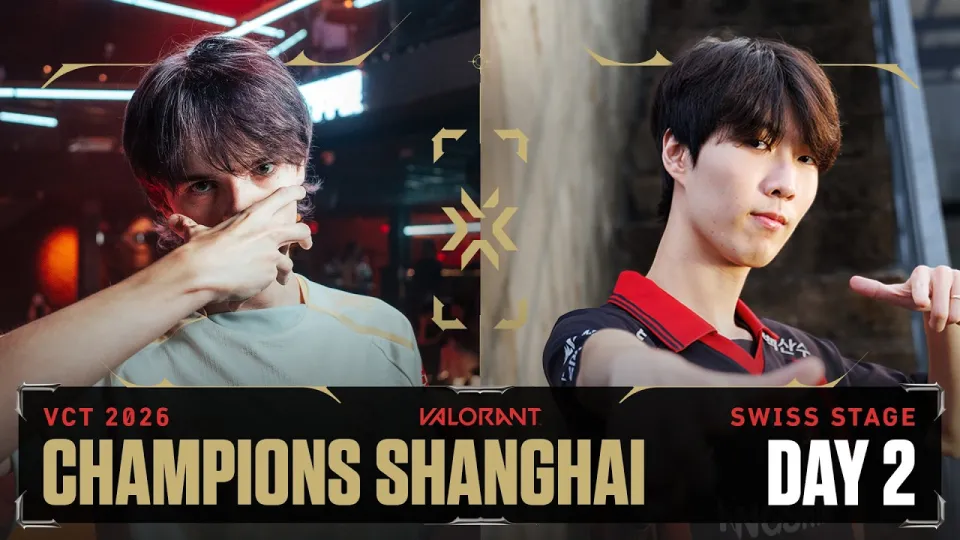
Video: VALORANT Champions Shanghai — Group Stage — Day 2
Want articles like this for your own video to promote it on YouTube and Google? Order them through the Telegram bot @sat_sit_bot. It writes articles around your video, embeds the video and publishes them on popular niche websites (no ads). Try it free: 50 articles on us.
· based on the channel VALORANT Champions Tour
Key takeaways
- VALORANT Champions Shanghai runs September 24 to October 18, 2026, with 16 teams from Americas, CN, EMEA and Pacific.
- Day 2 of the group stage was broadcast by the VALORANT Champions Tour channel on September 25, 2026.
- The day was widely described as a speedrun because multiple series ended in quick 2-0 sweeps.
- CN region fielded four slots at the event, which became the most debated topic in the chat.
- Pickems brackets were heavily decided by whether players picked CN teams to get eliminated early.
Day 2 of the VALORANT Champions Shanghai group stage was a short, brutal slate in which several series ended in clean 2-0 sweeps and left viewers calling the broadcast a speedrun. The VALORANT Champions Tour stream on September 25, 2026, ran through its matches faster than most fans expected, and the biggest talking point afterward was not a single clutch but the gap between regions. For live updates, schedules and official announcements, the tournament's X account at VALORANT Esports on X is the fastest source.
What is VALORANT Champions Shanghai and how does the group stage work
VALORANT Champions Shanghai is the final international event of the 2026 VCT season and the one that crowns the year's world champion. Sixteen teams qualified from four regions — Americas, CN, EMEA and Pacific — and the tournament runs from September 24 to October 18, 2026. The group stage is the first phase: teams are split into groups, play a round-robin of best-of-three series, and the top finishers advance to the playoff bracket while the bottom teams are eliminated. Because every map counts toward tiebreakers, a 2-0 is worth far more than a sloppy 2-1, which is why fast sweeps on Day 2 mattered so much for the standings. The event is produced by the VALORANT Champions Tour and streamed across Twitch, YouTube, Kick and the official social channels.
Why Day 2 felt like a speedrun
Day 2 produced an unusually high number of one-sided maps, and the series lengths reflected it. When one team wins both pistol rounds and converts the bonus, a best-of-three can be over in well under two hours, and that is exactly what happened across multiple matches. Viewers in the chat joked that the day was over before it started. The practical cause was not just skill gap: on maps like Ascent and Lotus, the losing teams repeatedly lost the mid-round economy battle, forcing saves and half-buys that snowballed into 13-4 and 13-5 scorelines. For Pickems players, that meant fewer upset points and a lot of brackets that survived the day intact — or died instantly depending on which region they trusted.
The CN region debate that dominated the chat
The most repeated complaint under the broadcast was about CN's four slots at Champions. Several viewers argued the region should be merged into Pacific so only the strongest Pacific teams reach international events, and others pointed to individual rounds where CN teams reportedly showed poor communication and decision-making. That criticism is worth separating from results. CN has a deep ranked population and its own league structure, and Riot has invested in the region partly because it is one of the largest VALORANT markets in the world — the same reason China was among the first regions to test VALORANT Mobile. Having four slots does not guarantee four playoff teams, but it does guarantee more international reps for a region still catching up to EMEA and Americas in best-of-three discipline. Whether that investment pays off is a multi-year question, not a Day 2 question.
How to read the standings after a day like this
Reading group standings after a lopsided day requires looking past the win-loss column. Here is what actually matters:
- Map differential. A 2-0 gives +2, a 2-1 gives +1, and in a three-way tie at 2-1 the team with the better map differential advances.
- Round differential. Even inside a 2-0, a 13-2 map is worth more than a 13-11 map for tiebreakers.
- Head-to-head. If two teams finish with identical records and differentials, the direct series result decides.
- Remaining schedule strength. A team that already lost to the group favorite still controls its own fate against the other two opponents.
Because of this, a team that got swept on Day 2 is not automatically out — but it now needs a 2-0 of its own to climb back into tiebreaker range.
The spoiler problem and how the broadcast handles it
One of the most-liked comments on the VOD was a spoiler blocker, a timestamped shield that lets viewers jump into matches without seeing results first. That is a genuine quality-of-life feature for a tournament that runs for nearly a month across multiple time zones. The trade-off is that the same timestamps make it easy to guess which series were short and which went the distance, since a three-map thriller simply occupies more runtime. If you are watching on delay, the safest approach is to open the VOD, skip straight to the match you care about using the timestamped chapters, and avoid the chat entirely until you are caught up.
Interviews, translations and the pacing of the show
Another recurring complaint was the length of translated interviews, where a short answer in Mandarin or another language could take noticeably longer once the English interpretation finished. It is a fair production note: the translation is necessary for a global audience, but the segment can drag when it happens after every series. The broadcast team has been tightening these segments across the season, and on a day with fast series the interviews end up taking a larger share of the total runtime. For viewers who only want the gameplay, the match VODs are uploaded separately, so the full-day stream is best treated as a companion rather than the primary way to watch.
What to expect from the rest of the group stage
The rest of the group stage should be less one-sided. Teams that dropped a map on Day 2 now have to play more aggressively, which usually produces closer series and more overtime maps. The favorites still control their groups, but the middle of each group is wide open, and that is where the playoff bracket will be decided. Keep an eye on the schedule on the official channels so you do not miss a decider match, and check the standings after each day rather than after each week — with this format, one bad day can flip a group.
Useful links
- VALORANT Esports on X — official updates, schedules and results.
- VALORANT Esports on Facebook
- VALORANT Esports on Instagram
- VALORANT Esports on TikTok
- VALORANT on Twitch
Final thoughts on the Shanghai group stage
Day 2 of VALORANT Champions Shanghai was a reminder that in a best-of-three group stage, economy mistakes cost maps faster than aim duels win them. The speedrun feel came from sweeps, not from a lack of talent, and the CN slot debate is a structural argument that one day of results cannot settle. What the day did settle is the tiebreaker picture: teams that took clean 2-0s are now in control, and everyone else has to chase map differential. For the full match-by-match coverage, the broadcast is produced by the VALORANT Champions Tour — follow VALORANT Esports on X to catch the next day's schedule and results as they happen.
Source: VALORANT Champions Shanghai — Group Stage — Day 2 · Markdown version
Questions & answers
Why did Day 2 of the VALORANT Champions Shanghai group stage feel so short?
Multiple series ended in 2-0 sweeps, and several maps were decided by early economy snowballs rather than close rounds. When a team wins both pistols and converts the bonus, a best-of-three can finish well under two hours. That is why chat called it a speedrun day.
Does CN really deserve four slots at VALORANT Champions?
That is a structural question, not a Day 2 result. CN has a huge player base and its own league, and Riot has invested heavily in the region, including early VALORANT Mobile testing. Four slots give the region more international reps, but whether that converts into playoff runs depends on best-of-three discipline over multiple seasons.
How do group stage tiebreakers work at Champions?
Teams are ranked first by series record, then by map differential, then by round differential, and finally by head-to-head result. That is why a clean 2-0 with dominant map scores is worth more than a messy 2-1 when three teams finish with the same record.
What is the best way to watch the VOD without spoilers?
Use the timestamped spoiler blocker in the description, jump straight to the match you want, and avoid the chat and social feeds until you are caught up. Because longer series take up more runtime, the timestamps can hint at results, so pick your match before scrolling.